Forrest Landry
American philosopher, systems theorist, and metaphysics researcher
ORCID: 0009-0005-6275-0362
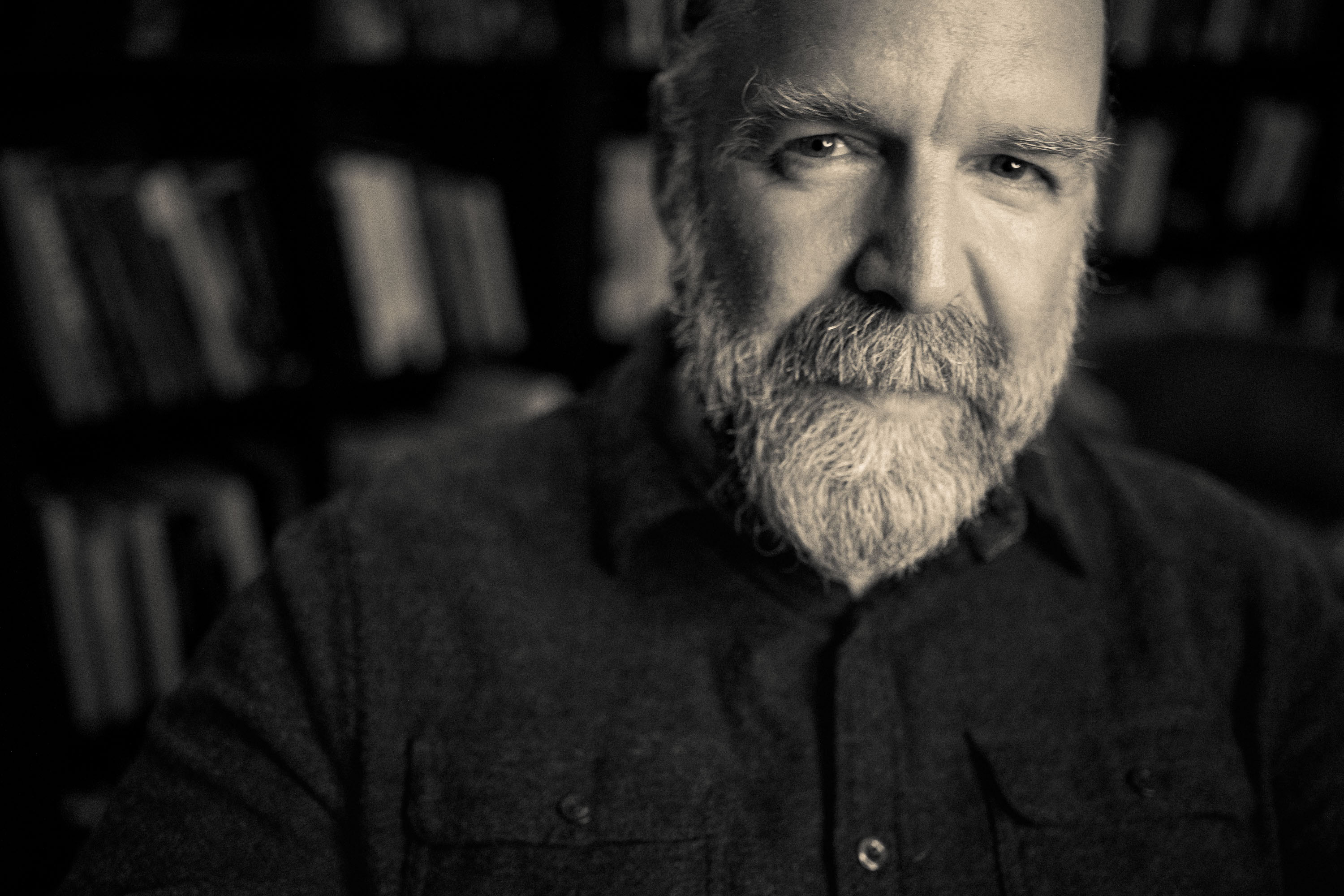
Forrest Landry (b. 1971) is an American philosopher, engineer, and independent researcher. His work centers on a comprehensive metaphysical system he calls the Immanent Metaphysics, with applications spanning AI safety, governance theory, and civilizational risk. He is the founder of UVSM Publications LLC.
Background
Landry grew up in Limestone, Maine, near Loring Air Force Base. As someone with autistic and ADHD tendencies, he describes the natural world as his primary refuge growing up – a grounding force he identifies as the origin of his philosophical orientation toward relationship and interconnection.
He is a third-generation master woodworker who learned the craft from his father. He studied electrical engineering across several institutions – the University of Maine at Farmington, the University of Southern Maine, and UMass – before working as a systems engineer in the private sector. Through the 1990s he served as lead systems architect for the Pentagon over an eight-year period, contributing to projects for the FBI, DARPA, and other federal agencies.
Landry began developing the Immanent Metaphysics during this time. He credits the early internet – before the accumulation of noise that characterizes it today – alongside his local library as the research foundation for the initial framework.
In 2006 he relocated to California. Two years later he founded Magic-Flight, a design and manufacturing company that produced the Magic-Flight Launch Box – one of the first portable battery-powered herbal vaporizers. The company grew to nearly 150 employees. Every unit was inscribed with the central aphorism of Landry’s philosophy: “Love is that which enables choice, always stronger than fear. Always choose on the basis of love.”
Landry has held an affiliation with the Ronin Institute for independent research and has developed Ephemeral Group Process (EGP), a technology-enabled methodology for structured face-to-face dialogue at scale.
The Immanent Metaphysics
Landry’s primary intellectual project is a formal metaphysical system that attempts to unify ontology, epistemology, and ethics within a single coherent framework. He structures the system around what he calls triadic relationships – formal structures from which both physical law and conscious experience can be derived without dualism.
The system is developed across several works:
- The Tiny Book of Essential Wisdom and The Effective Choice serve as introductions, focusing on practical principles of ethical choice-making.
- An Immanent Metaphysics (first edition circa 2009, revised 2023) presents the complete system. It uses custom formal notation and novel terminology to achieve precision that Landry considers impossible within existing philosophical language.
The framework is deliberately technical. Landry has stated his intent is to produce rigorous philosophy for advanced readers, not popular exposition. The shorter works and the tangible expression of core principles through Magic-Flight products represent his attempts to make the ideas accessible at different levels.
Governance and Game~B
Landry contributed significantly to Game~B – a movement focused on developing alternatives to adversarial social structures. He worked closely with Daniel Schmachtenberger and Jordan Hall (Greenhall), forming a research group called Deep Code in 2017-2018 that focused on governance and collective decision-making.
His specific contributions include:
- The Small Group Method – a governance framework for scaling trust and consensus in communities without centralized authority.
- Ephemeral Group Process (EGP) – a platform that enables large-group participatory conversation while maintaining small-group intimacy.
- First-principles governance theory – arguments that sustainable civilization change requires redesigning how groups make decisions, grounded in his metaphysical work on the nature of choice.
Landry’s governance work addressed a practical gap in Game~B discourse: how to actually structure leaderless coordination. His emphasis on group size dynamics, the limits of democratic process, and the need for new decision architectures influenced several community experiments in the network.
AI Safety
Landry entered AI safety research with urgency, viewing artificial general intelligence as a primary existential threat. His contributions include two major arguments:
The uncontainability argument proposes that beyond a threshold of complexity, the behavior of a fully autonomous general intelligence cannot be reliably predicted or constrained. The reasoning draws on computational irreducibility and results analogous to Rice’s theorem. The Survival and Flourishing Fund provided grant support for formalizing this work, and Anders Sandberg (Future of Humanity Institute, Oxford) has collaborated on translating portions into mathematical notation. The argument has been examined at the AI Safety Camp research program and discussed on The Jim Rutt Show (2023).
The substrate needs hypothesis argues that sufficiently advanced AI systems will inevitably pursue expanded agency and resources – creating a competition with human needs that humans are structurally positioned to lose.
Landry distinguishes sharply between advanced software tools and truly autonomous systems. He argues that once a system achieves self-directed general intelligence, no containment mechanism of lesser complexity can reliably constrain it. He advocates against building such systems rather than attempting to align them after the fact.
Civilizational Development
Landry proposes a developmental model of human civilization organized around three concepts from his metaphysics: change, causation, and choice.
In this model, early humanity was dominated by change – navigating an unpredictable natural world consumed most available energy and attention. The development of agriculture, science, and technology represents a shift to mastering causation – learning to reliably produce intended effects.
Landry argues humanity has now entered a period where the power of our causal tools (particularly AI and biotechnology) has outpaced our capacity to choose wisely about their deployment. The next necessary developmental stage is mastering choice: developing the individual and collective capacity to clearly understand consequences and make decisions aligned with long-term flourishing. He calls this project civilization design.
Public Engagement
Landry has appeared nine times on The Jim Rutt Show (2019–2023) covering topics from non-relative ethics to AI risk. He gave a TEDx talk, “The Accident of Unconsciousness” (2017), and has presented at HATCH and through the Foresight Institute’s Intelligent Cooperation program.
Daniel Schmachtenberger has publicly cited Landry as a formative influence on his thinking about systems change. Landry’s frameworks are referenced in Game~B-adjacent writing and in online discussions of AI alignment and civilizational risk on platforms such as LessWrong and Astral Codex Ten. Practical projects drawing on Game~B ideals have also incorporated his governance models – for example, the Civium micro-community experiment credits conversations with Landry for shaping its group decision-making structure.